One search. Every resale marketplace. Zero tab-switching.
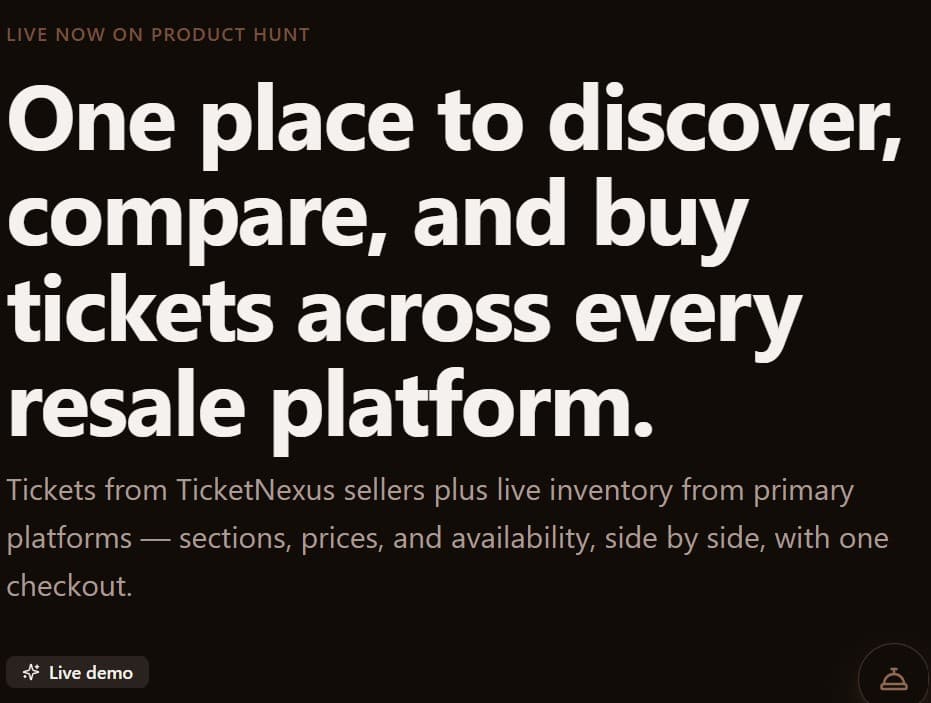
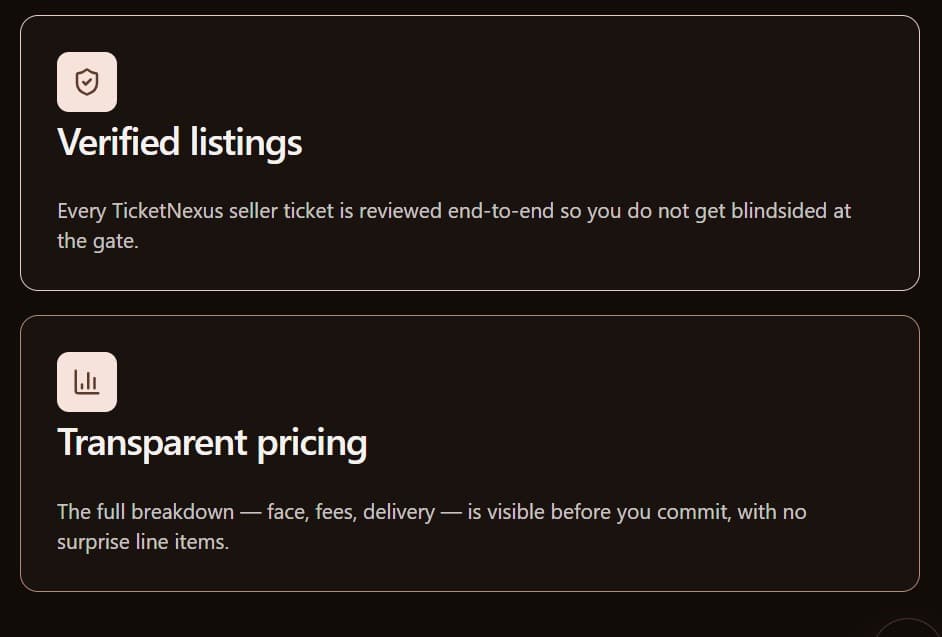
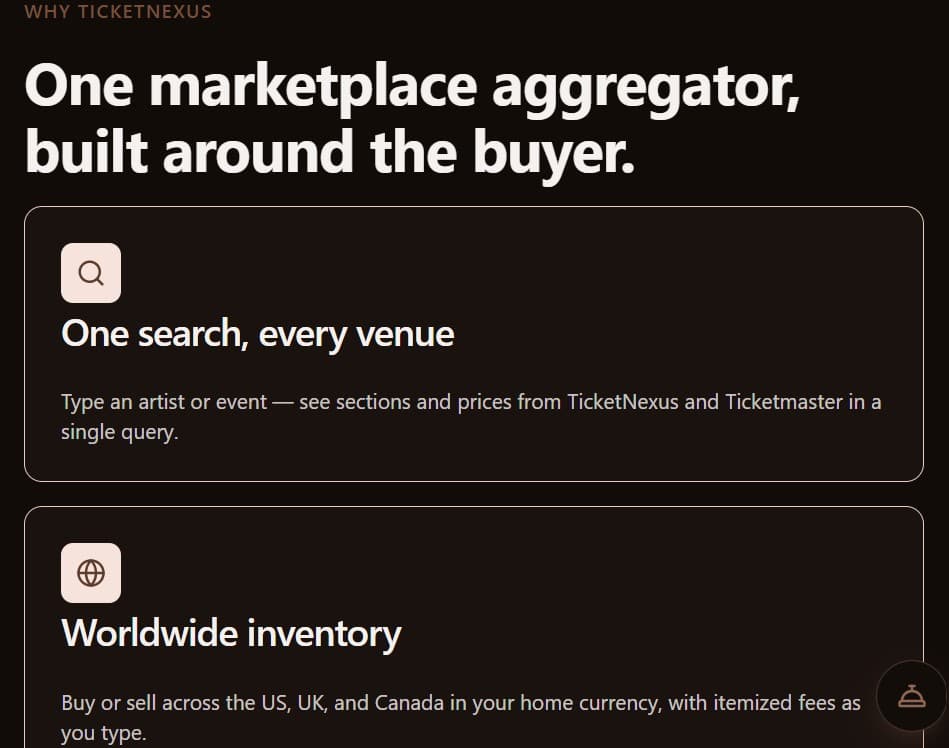
TicketNexus surfaces resale and primary inventory side by side — sections, prices, and fees transparent before you commit, with one checkout.
Watch the live launch on Product Hunt.
The full walkthrough drops into this slot on launch day — until then, the live PH hero is pinned here so visitors land on the same surface the Product Hunt post is showing.
Three promises the desk keeps from the first search.
TicketNexus ships three things on launch day — every other feature is layered on top of these once the core flow lands.
Built for the launch-day reader, not the pre-launch reader.
Six proof points that earn the trust of a Product Hunt surfacer who hits this page on launch day with twenty minutes to decide whether to keep scrolling.
Four product surfaces the launch-day reader wants to see.
Marketplace features, captured for the visitor who arrived at the page to verify the premise before they tap through. Each shot is the relevant surface, not a hero placeholder.
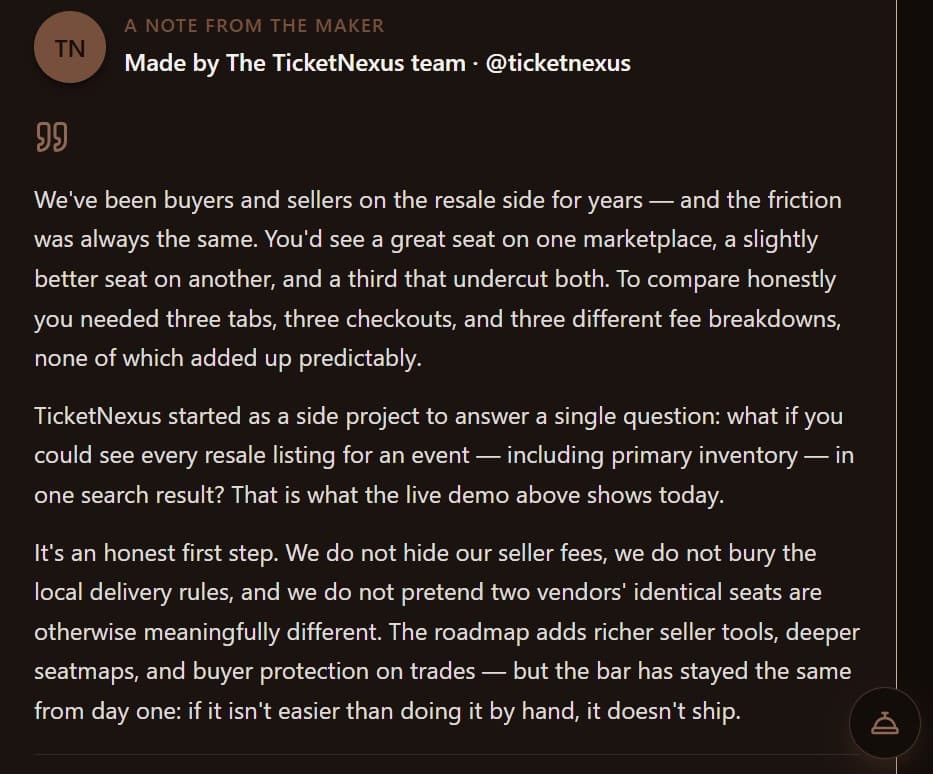
Why we built TicketNexus.
We’ve been buyers and sellers on the resale side for years. You’d see a great seat on one marketplace, a slightly better seat on another, and a third that undercut both — but to compare honestly you needed three tabs, three carts, three sets of fees, and three checkout disclosures. None of them added up the same way.
TicketNexus started as a side project to answer one question: what if every resale listing for an event — including the primary inventory — landed in the same search result, ranked by the same all-in total? The four marketplace feature cards above are the surfaces that answer it.
It is an honest first step. We do not hide seller fees, we do not bury the local delivery rules, and we do not pretend two vendors’ identical seats are otherwise meaningfully different. The roadmap adds richer seller tools, deeper seatmaps, and buyer protection on trades — but the bar has stayed the same from launch day: if it isn’t easier than doing it by hand, it does not ship.
— Composed by the TicketNexus desk
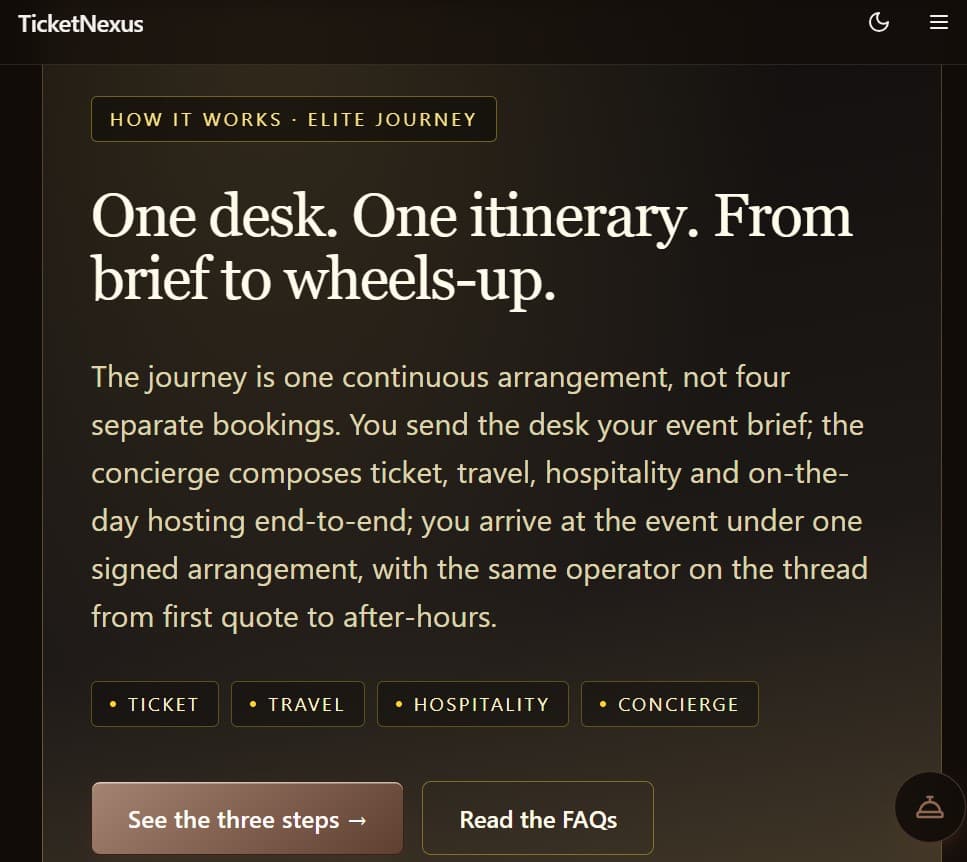
Brief, compose, hosted — one continuous arrangement.
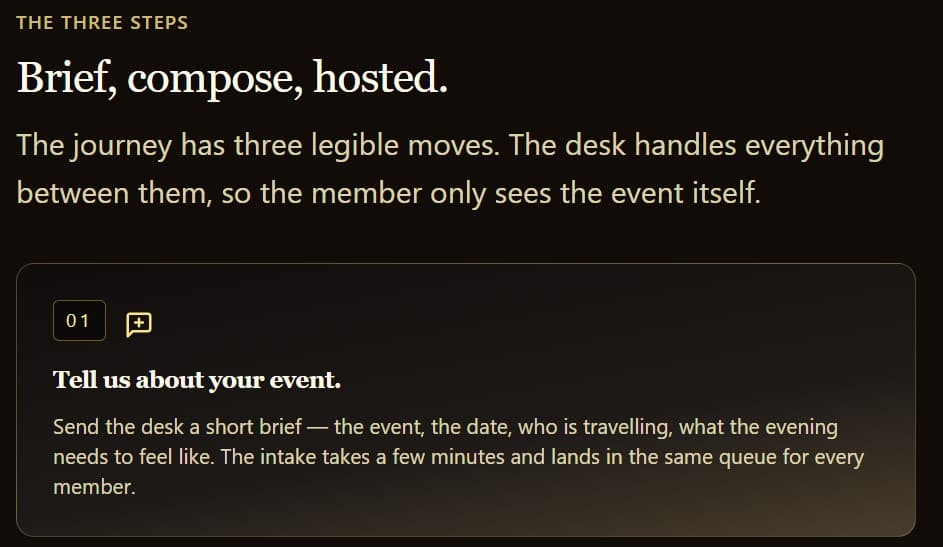
The Elite journey has three legible moves. The desk handles everything between them, so the member only sees the event itself.
 Brief the desk.Send the desk a short brief — the event, the date, who is travelling, what the evening needs to feel like. The intake takes a few minutes and lands in the same queue every Elite member uses.
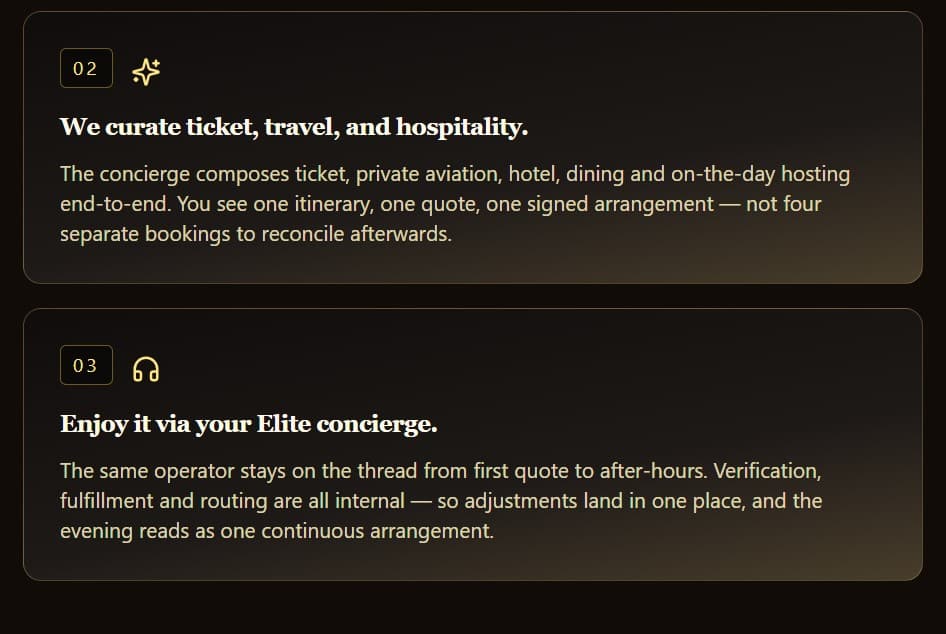
 Compose, end-to-end.The concierge composes ticket, private aviation, hotel, dining, and on-the-day hosting together. One itinerary, one quote, one signed arrangement — not four separate bookings to reconcile afterwards.
 Hosted, wheels-up.The same operator stays on the thread from first quote to after-hours. Verification, fulfillment, and routing are all internal — adjustments land in one place on event day.
See what TicketNexus looks like.
Five product surfaces the launch-day reader wants to verify before they tap through — hero, buyer-first search, transparent pricing, the live PH hero, and the cross-resale comparison.
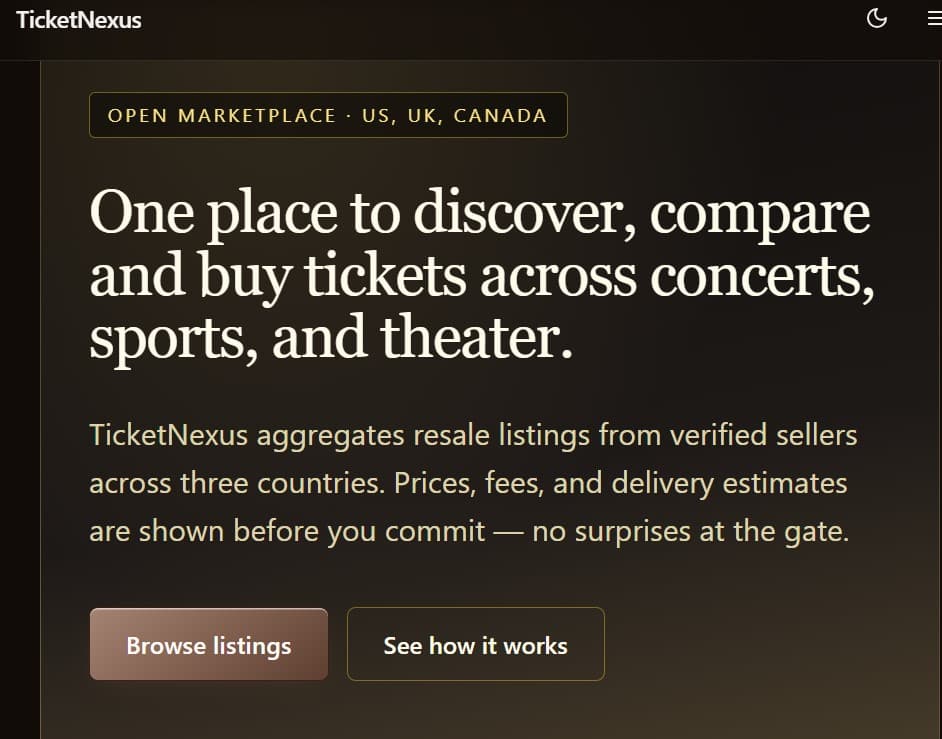
One place to discover concerts, sports, and theater 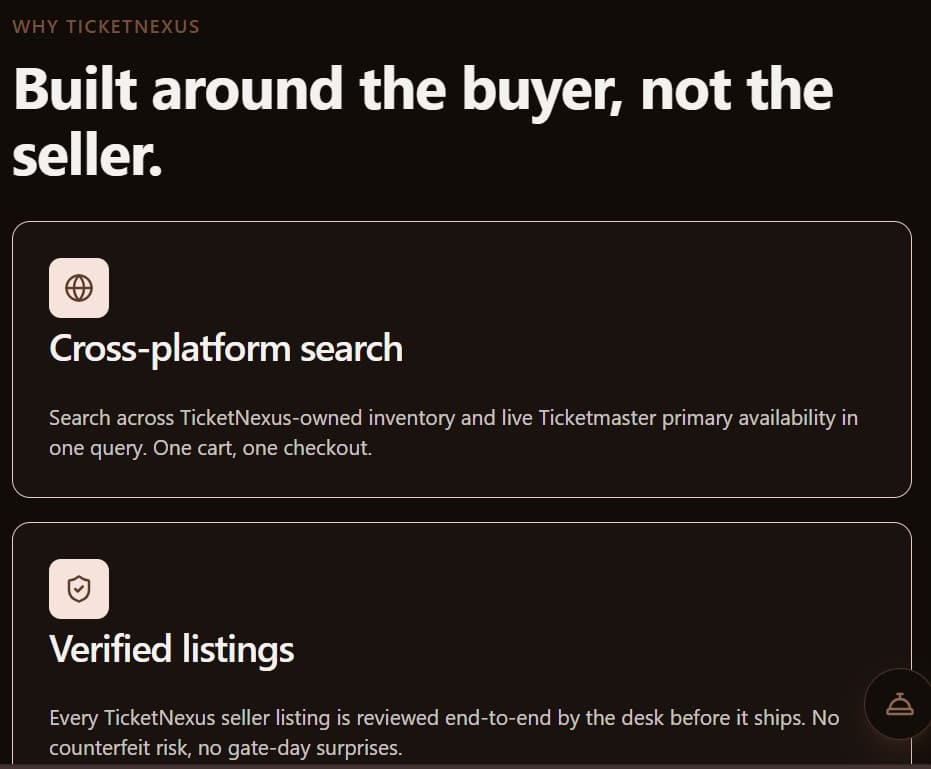
Built around the buyer, not the seller 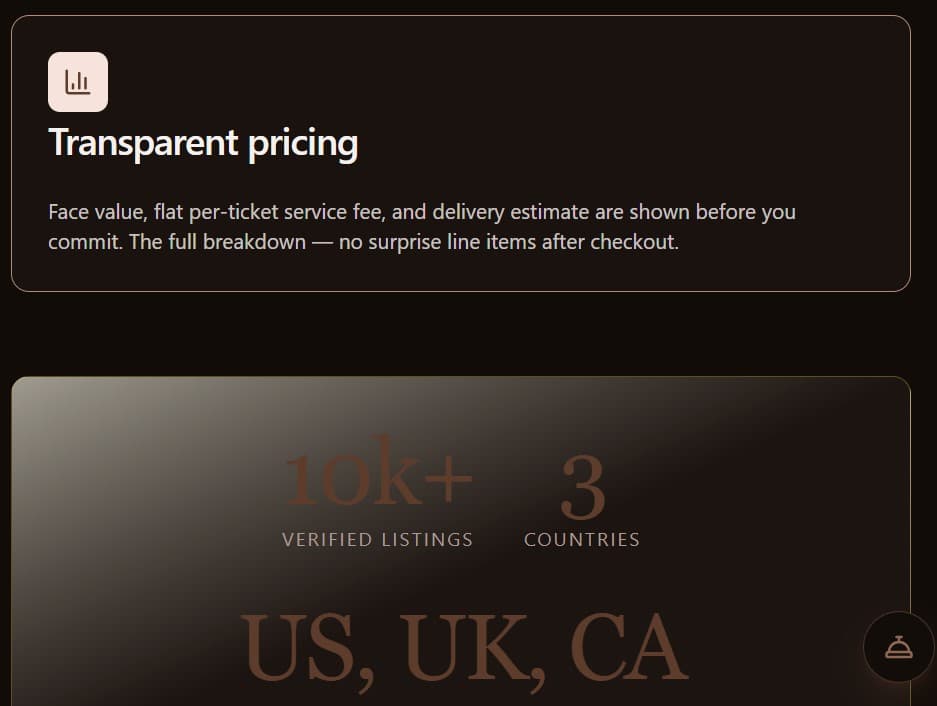
Transparent pricing, 10k+ verified listings, 3 countries Live now on Product Hunt 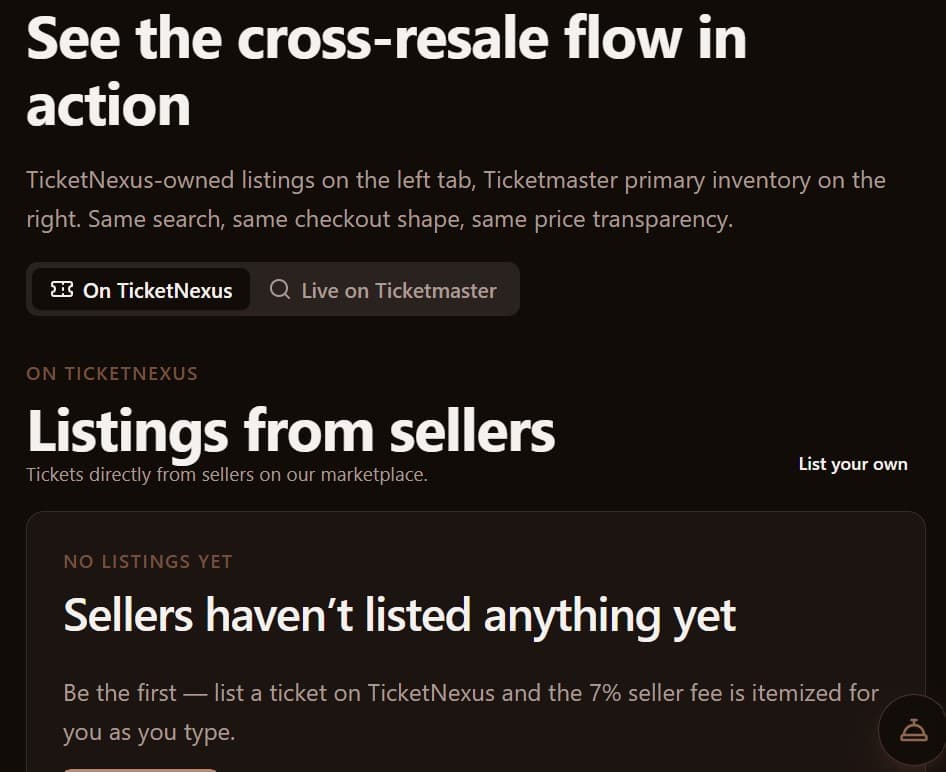
Resale and primary inventory compared side by side
Five questions the launch-day reader actually asks.
The threads we expect on launch day — answered inline, with the long-form version on the journal and a dedicated FAQ page.